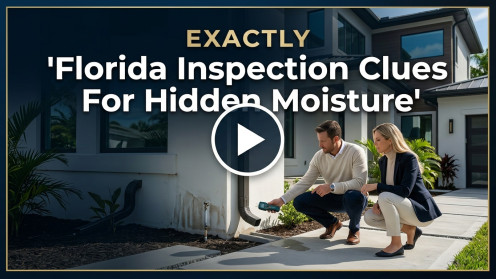
In Florida real estate—especially throughout Tampa Bay—understanding how local factors like humidity, sand, clay pockets, termites, and storm impacts can affect a property’s floors and foundations is essential. During inspections, I always recommend paying close attention to hidden moisture and drainage issues. Requesting moisture readings, checking the yard’s slope, reviewing gutters, and looking for exterior wall staining can all reveal water collecting near foundations, which often leads to costly repairs down the line.
Red flags such as musty odors, slight floor warping, lower-wall stains, fresh cosmetic fixes, sections of replaced flooring, or white residue on concrete should never be overlooked. These subtle clues can point to unresolved moisture concerns. Before installing new flooring, it’s wise to address drainage, test and seal slabs, and consider moisture-resistant materials like porcelain tile or quality luxury vinyl plank—choices that can protect your investment and peace of mind.
After flooding, thorough drying, subfloor and slab testing, and documenting conditions are crucial steps. Upgrades that make a home more moisture-smart not only reduce future repairs, but also support long-term resale value—something I always keep at the forefront when guiding my clients. When it comes to real estate, it’s about more than the transaction; it’s about your long-term comfort and investment success.
Leave a Reply